

Best LED Lighting for Contractors: 2026 Guide
Table of Contents
- What to Look for in LED Lighting for Contractors
- How to Install Recessed LED Lights on Job Sites
- Best LED Work Lights for Job Sites
- Commercial LED Lighting Standards and Compliance
-
Top LED Lighting Options for Contractors
- Flexfire LEDs: High-CRI Linear Lighting for Custom Projects
- Beyond LED Technology: Commercial-Grade High Bays and Panels
- LightMart: Outdoor and Commercial Fixtures with Industry Reputation
- LED Light Expert: Energy-Efficient Retrofit Solutions
- Access Fixtures: Vandal-Resistant and Specialized Lighting
- Alberta LED Lights & Electrical Supplies: Local Contractor Support
- Quick Comparison: LED Lighting for Contractors
- How to Choose the Right LED Lighting for Your Project
- Conclusion
- Frequently Asked Questions
Last Updated: September 4, 2026
Choosing the best LED lighting for contractors comes down to more than picking the brightest bulb on the shelf. Contractors need fixtures that survive job site dust, deliver accurate color for inspections, meet Canadian electrical codes, and fit the specific mounting constraints of each project. Getting this wrong means callbacks, wasted labor hours, and clients who question your judgment. This guide from Alberta LED Lights & Electrical Supplies breaks down the technical specifications that actually matter, the installation methods that save time, and the commercial standards you need to comply with in Canada.
Most guides treat this as a simple wattage comparison. The reality is different. A fixture with great lumen output can fail your project if the distribution pattern doesn't suit the ceiling height, or if it lacks the IP rating for a damp environment. We will walk you through the selection criteria, the installation process for recessed fixtures, and the top product categories worth your budget.
What to Look for in LED Lighting for Contractors
The best LED lighting for contractors balances four competing priorities: light output, energy consumption, color quality, and physical durability. Skip any of these and you end up with a fixture that either underperforms on site or fails prematurely. LED lighting is a long-term investment in fixture durability and lifespan, so the selection criteria differ from what a homeowner might prioritize.
Lumen Output and Brightness Requirements
Lumen output measures the total visible light emitted by a fixture. For contractor work, this is the baseline specification that determines whether a space is safe and functional. A warehouse aisle needs different illumination than a residential basement renovation. Matching the lumen output to the space type prevents both under-lighting safety hazards and over-lighting that wastes energy.
Energy Efficiency and Wattage Savings
LED fixtures deliver the same or higher lumen output as legacy HID and fluorescent systems while drawing significantly less wattage. For large commercial retrofits, the reduction in energy consumption translates directly into cost-effectiveness for the building owner. This is where your role as a contractor extends beyond installation into advising clients on long-term operational savings.
Color Temperature and CRI for Work Visibility
Color temperature, measured in Kelvin, determines whether light appears warm or cool. For work sites where color accuracy matters, such as painting, finishing, or electrical work, a higher CRI (Color Rendering Index) is critical. Look for fixtures rated 80 CRI or higher; 90 CRI is better for detail-oriented tasks (IES definition of Color Rendering Index). The right color temperature also reduces eye strain during long shifts.
How to Install Recessed LED Lights on Job Sites
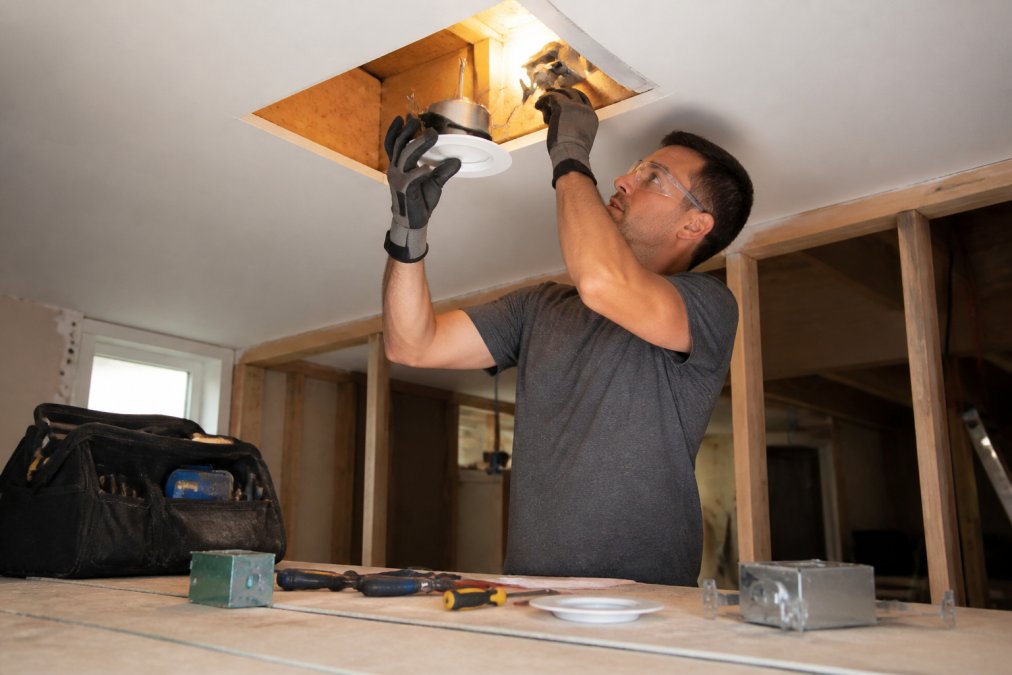
Installing recessed LED lights requires more planning than surface-mounted fixtures. The housing must fit within ceiling cavities, clearance must be maintained around insulation, and the wiring must comply with local codes. When done correctly, recessed LED lights deliver a clean, professional appearance that clients expect in modern renovations.
Pre-Installation Planning and Layout
Before cutting any holes, map the layout based on the lighting layout and photometric analysis. Measure ceiling joist spacing to confirm housing diameters will fit. Check for obstructions like ductwork, plumbing, or structural beams above the ceiling plane. A detailed layout prevents costly mistakes and ensures even distribution patterns across the work surface.
Step-by-Step Installation Process
Start by turning off power at the breaker and verifying the circuit is dead with a tester. Cut the ceiling opening using the template provided with the housing. Feed the wiring through the junction box and secure the connections with wire nuts. Push the housing into place and lock the clips. Install the trim and the LED module, then restore power and test the fixture. Installation efficiency improves with practice, but never rush the electrical connections.
Common Installation Mistakes to Avoid
A frequent error is installing non-IC-rated housings where insulation will contact the fixture, creating a fire hazard. Another mistake is over-tightening the mounting clips, which warps the housing and affects the beam angle. Always verify the voltage requirements match the circuit before wiring. These oversights cause flicker, premature driver failure, and safety violations.
Best LED Work Lights for Job Sites
The best LED work lights for job sites are portable, durable, and bright enough to illuminate large work areas. A contractor needs lights that survive drops, resist dust and moisture, and provide consistent illumination without flicker. Flicker-free operation is essential to prevent eye fatigue during extended work sessions.
High-Bay Fixtures for Warehouse and Industrial Spaces
High bay lights are designed for ceilings above 7 metres, making them the standard for warehouses, gymnasiums, and industrial plants (IES definition of high-bay lighting). These fixtures deliver high lumen output with wide distribution patterns to cover large floor areas. Modern high bay lights integrate smart lighting controls and occupancy sensors, allowing building owners to reduce energy consumption when spaces are unoccupied.
Portable and Temporary Work Lighting Solutions
For renovation and construction phases, portable work lights provide temporary illumination before permanent fixtures are installed. Look for units with sturdy stands, adjustable heads, and high IP ratings for dust and water resistance. These lights must withstand the rigors of an active job site, including vibration, impacts, and temperature swings.
Durability and Build Quality for Harsh Environments
Fixture durability starts with the housing material and the IP rating. Die-cast aluminum housings dissipate heat effectively, which extends LED lifespan and protects the driver. Thermal management is the primary factor in LED longevity; a fixture that runs too hot will fail long before its rated lifespan. Check the IP rating against the environment: IP65 or higher for dusty or wet locations.
Commercial LED Lighting Standards and Compliance
Commercial LED lighting standards in Canada exist to protect workers and building occupants. Compliance is not optional; it is a legal requirement for any commercial installation. Contractors who ignore these standards risk fines, failed inspections, and liability if an incident occurs. Understanding the regulatory landscape is part of the job.
CSA Certification and Safety Requirements
CSA certification confirms that a lighting product meets Canadian safety standards for electrical and fire hazards. Every fixture installed in Canada must bear the CSA mark or an equivalent accepted certification. Verify the certification mark on the product label before installation. Counterfeit or uncertified fixtures are a growing problem, so source from reputable suppliers who stock CSA-listed components in inventory.
IP Ratings and Environmental Protection
The Ingress Protection rating classifies a fixture's resistance to dust and water. The first digit covers solids, the second covers liquids. A fixture rated IP65 is dust-tight and protected against water jets, making it suitable for most outdoor and industrial applications (IEC explanation of IP ratings). Match the IP rating to the actual environment of the installation, not the marketing claims.
Distribution Patterns and Beam Angles
Distribution patterns determine how light spreads across a space. Type I through Type V patterns serve different applications, from narrow aisles to wide parking lots. The beam angle, measured in degrees, controls the spread of light from the fixture. Narrow beams suit high ceilings and accent lighting; wide beams suit general area illumination. Photometric analysis tools help you model these patterns before committing to a purchase.
Top LED Lighting Options for Contractors
The market offers several strong options for contractors, each with a specific focus. Alberta LED Lights & Electrical Supplies combines specialized LED lighting expertise with essential electrical components under one roof. Contractors in Calgary benefit from a curated inventory that meets specific project requirements without the backorder delays common with larger distributors. We stock CSA-listed components and deliver professional-grade lighting and dependable electrical hardware.
Flexfire LEDs: High-CRI Linear Lighting for Custom Projects
Flexfire LEDs specializes in premium linear lighting for architectural and custom commercial interiors. Their high-CRI LED strips deliver accurate color rendering for designer-led projects. Contractor support and project consultation services help with complex installations. The premium pricing reflects the component quality, making Flexfire a strong choice for high-end work where color accuracy is non-negotiable.
Beyond LED Technology: Commercial-Grade High Bays and Panels
Beyond LED Technology distributes DLC-listed LED panels, troffers, and high bay fixtures for large-scale commercial retrofits. Their catalog includes integrated smart lighting control options and a strong selection of exterior wall packs and floodlights. This is a solid choice for contractors managing big industrial projects that require bulk distribution and energy-efficient, high-output fixtures.
LightMart: Outdoor and Commercial Fixtures with Industry Reputation
LightMart brings 25 years of experience to commercial outdoor lighting. Their inventory covers parking lot lights, wall packs, and canopy lights with detailed technical specifications for every fixture. Contractors needing reliable, high-durability outdoor lighting for commercial properties will find competitive volume pricing here. The focus is heavily weighted toward outdoor and industrial fixtures.
LED Light Expert: Energy-Efficient Retrofit Solutions
LED Light Expert focuses on high-efficiency replacements for legacy HID and fluorescent systems. Their fixtures deliver high lumen output for warehouse and retail spaces while reducing energy consumption. Technical support for energy-saving calculations helps you present a clear business case to clients. The website is catalog-focused, but the product range is comprehensive for indoor and outdoor use.
Access Fixtures: Vandal-Resistant and Specialized Lighting
Access Fixtures supplies specialized commercial lighting, including vandal-resistant post top lights and high-performance LED arrays for exterior safety. Their customizable optics address specific site requirements. For contractors working on government or high-security projects, Access Fixtures provides the compliance documentation needed for demanding specifications.
Alberta LED Lights & Electrical Supplies: Local Contractor Support
Alberta LED Lights & Electrical Supplies serves contractors, builders, and electricians in Calgary with specialized LED lighting and essential electrical components. Our curated inventory covers residential and commercial projects, and our local presence means you can verify stock before you order. We understand the challenges of project timelines, which is why we focus on keeping professional-grade products available when you need them.
Quick Comparison: LED Lighting for Contractors
| Supplier | Core Focus | Best For | Key Advantage |
|---|---|---|---|
| Alberta LED Lights & Electrical Supplies | LED lighting + electrical components | Calgary contractors needing local stock | Curated inventory, CSA-listed products |
| Flexfire LEDs | Linear lighting, high-CRI strips | Custom architectural interiors | Contractor support and consultation |
| Beyond LED Technology | Panels, troffers, high bays | Large-scale commercial retrofits | Smart lighting control options |
| LightMart | Outdoor and industrial fixtures | Commercial property exteriors | 25 years of industry experience |
| LED Light Expert | Energy-efficient replacements | HID and fluorescent retrofits | Energy-saving calculation support |
| Access Fixtures | Vandal-resistant, specialized | Government and high-security sites | Strong compliance documentation |
How to Choose the Right LED Lighting for Your Project
Selecting the right LED lighting requires a systematic approach. Start with the space type, then calculate the cost implications, and finally verify the warranty and replacement terms. This process ensures the fixtures you specify will perform for years, not just through the warranty period.
Assessing Lumen Requirements by Space Type
Different spaces demand different light levels. A general office needs roughly half the lumens per square foot of a detailed workshop. Reference the recommended illumination levels for the space type and work backward to the fixture count. This prevents both under-lighting and the waste of over-lighting.
Calculating Long-Term Cost Savings
The upfront price of a fixture is only part of the equation. Factor in the wattage reduction, the lifespan of the LED module, and the maintenance reduction from fewer bulb changes. A fixture that costs more initially often delivers better cost-effectiveness over its lifetime through lower energy consumption and reduced labor for replacements. Present these calculations to clients to justify the specification.
Warranty and Replacement Logistics
Commercial LED fixtures should carry a warranty of at least five years. Verify what the warranty covers: the LED module, the driver, or the entire fixture. Replacement logistics matter for contractors. If a fixture fails, how quickly can you get a replacement? A local supplier with stock on hand beats a distant distributor with a three-week lead time every time.
Conclusion
Selecting the best LED lighting for contractors requires attention to lumen output, color quality, durability, and compliance with Canadian standards. The right fixture reduces energy consumption, minimizes maintenance, and keeps job sites safe and productive. Start with the space requirements, verify the certifications, and source from a supplier who stocks what you need.
Alberta LED Lights & Electrical Supplies offers the specialized LED lighting and electrical components that Calgary contractors rely on for both residential and commercial projects. Our curated inventory ensures access to professional-grade products, and our local presence supports the timelines your projects demand. Get started with Alberta LED Lights & Electrical Supplies and keep your next installation on schedule.
Frequently Asked Questions
What lumen output do I need for contractor LED lighting?
Lumen requirements depend on the space and task. Warehouse and industrial areas typically need 400-800 lumens per square metre for general work. Detailed task areas may require 1000+ lumens. High-bay fixtures for commercial warehouses often range from 10,000 to 40,000 lumens per fixture. Consult photometric analysis tools or your supplier to match lumen output to your specific space dimensions and work requirements.
Is 5000K or 6000K better for contractor work lighting?
Both are effective for work environments. 5000K (daylight) provides neutral, natural-looking light suitable for general construction and detail work. 6000K (cool daylight) offers slightly brighter perception and is preferred for precision tasks requiring high color accuracy. Choose 5000K for general job sites and 6000K for detailed finish work or inspection tasks. High CRI (90+) at either temperature ensures accurate color rendering.
What safety certifications should contractor LED lights have?
Look for CSA (Canadian Standards Association) certification, which confirms compliance with electrical safety standards. Check IP ratings appropriate to your environment: IP65 for wet or dusty job sites, IP54 for standard indoor work. Fixtures should be flicker-free to reduce eye strain during long work periods. Verify thermal management ratings to ensure safe operation in enclosed or high-temperature spaces. Always confirm certifications match your project's specific requirements.
How long do commercial-grade LED fixtures last on job sites?
Quality commercial-grade LED fixtures typically last 50,000 to 100,000 hours, translating to 10-20+ years of continuous use depending on duty cycle. On job sites, actual lifespan depends on environmental conditions: dust, vibration, and temperature fluctuations may reduce lifespan. Check warranty terms with your supplier; many offer 3-5 year warranties on commercial fixtures. Proper installation and thermal management extend fixture life significantly.
What's the difference between high-bay and standard commercial LED lighting?
High-bay fixtures are designed for spaces with ceilings 7+ metres high and deliver high lumen output (10,000-40,000+) with wide distribution patterns to cover large floor areas efficiently. Standard commercial fixtures work for 3-7 metre ceiling heights with moderate lumen outputs (2,000-8,000). High-bay fixtures use specialized optics and thermal management for industrial environments; standard fixtures suit retail, offices, and smaller commercial spaces. Choose based on your ceiling height and coverage area.